Quick API server for testing
When you need an API server for testing there's Total.js framework to get you up and running in minutes.

When you need an API server for testing there's Total.js framework to get you up and running in minutes. If You want to know how then keep reading.
- first of all let's create a folder and install Total.js
- now let's create index.js which will be the only file we need:
- open the file in your favorite Sublime Text editor :)
Server
First thing we do is setup a server using framework.http:
The above code can be used as a static file server. If You create a public folder then whatever you place in there will be accessible. e.g. ./public/favicon.ico => localhost:8000/favicon.ico.
Schema
Next we setup a schema and some properties using SchemaBuilder.
Routes
Now it's time to create some routes using F.route. In each route we use *Product flag which tells the framework we want to use the schema methods in a controller.
Controllers
Since we've specified the *Product flag we can use schema methods such as $get, $query, $save, etc..
Logging requests
Let's add logging for each request so we know what's going on:
Find the gist here index.js.
Extra
If you want it to work really quickly you can use recently added functionality NOSQL inmemory. Add it just bellow require('total.js').http('release');.
This will keep all documents from products collection in memory for quicker access.
Links:

Keep reading

Using AI for Traffic Analysis and Smart Parking Monitoring
Discover how AI, NVIDIA Jetson AGX, and Total.js IoT transform camera data into traffic insights and automated parking occupancy monitoring.
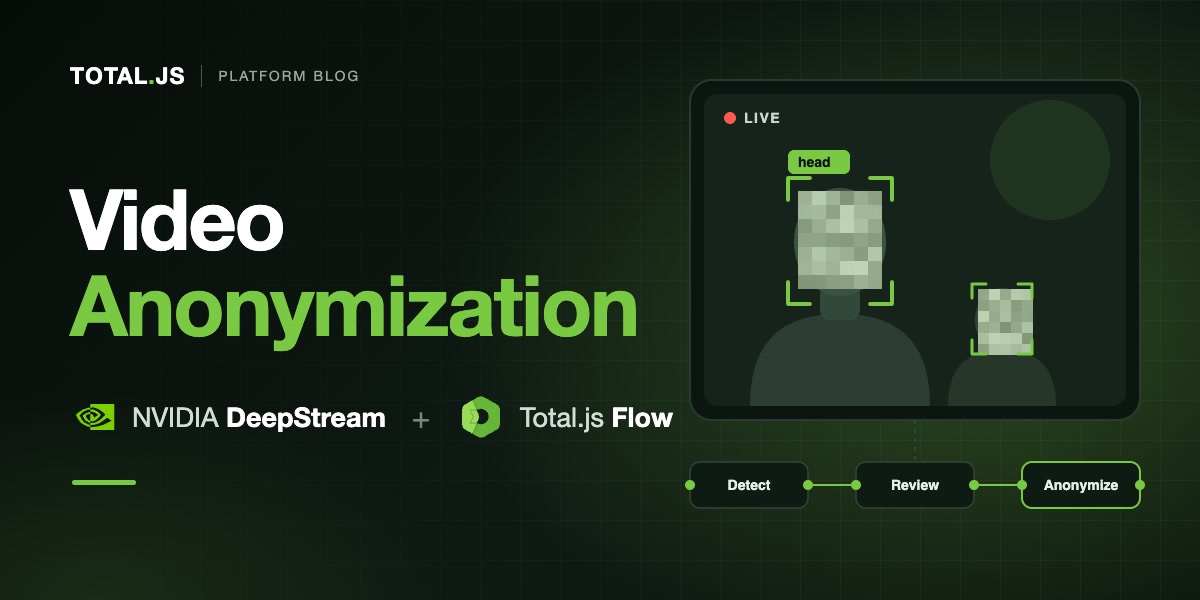
Total.js Platform and NVIDIA DeepStream: Automated AI Video Anonymization
Discover how we combined Total.js Platform, Total.js Flow, and NVIDIA DeepStream to build a scalable, GPU-accelerated video anonymization system for a major enterprise customer. Explore how we process large volumes of video recordings, automate workflows across multiple locations, and manage AI-powered anonymization through a centralized interface.
October report 2026
A quick overview of all changes and news from the entire Total.js Platform. Read more about our work.
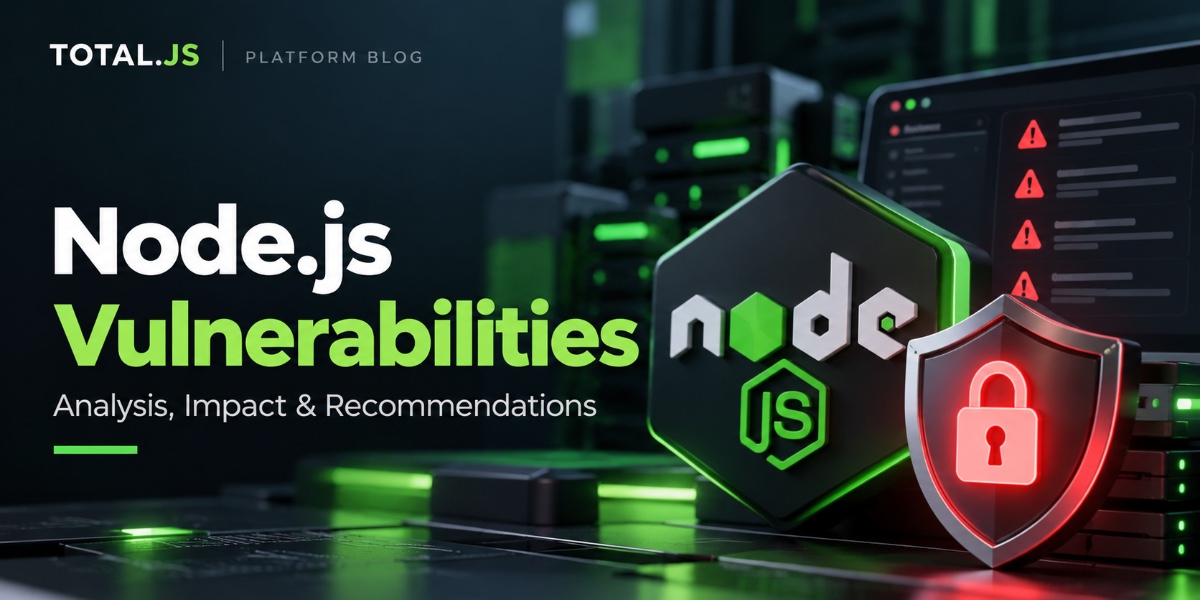
Node.js Security Vulnerabilities
Recent Node.js security updates have addressed serious vulnerabilities, including an issue in Brotli decompression. The news is particularly interesting because AI-assisted security research helped uncover a flaw in technology used by applications around the world.
September report 2026
A quick overview of all changes and news from the entire Total.js Platform. Read more about our work.
August report 2026
A quick overview of all changes and news from the entire Total.js Platform. Read more about our work.
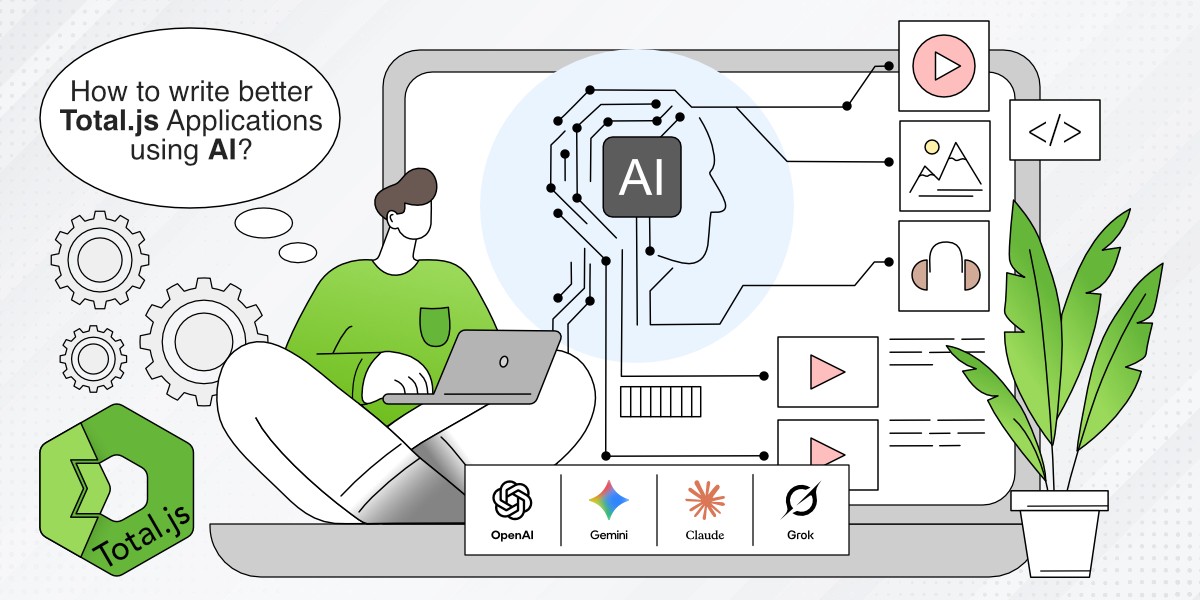
How to write better Total.js Applications using AI?
Learn how to make AI coding agents write better, more native Total.js applications!
July report 2026
A quick overview of all changes and news from the entire Total.js Platform. Read more about our work.
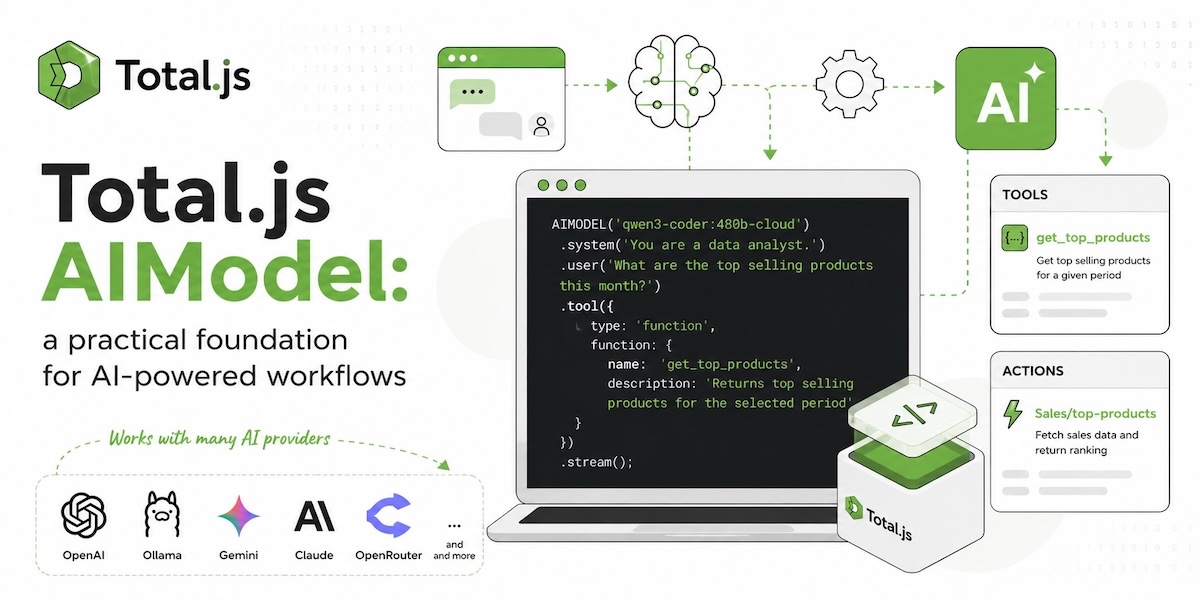
Total.js AIModel: a practical foundation for AI-powered workflows
How Total.js helps developers integrate AI models into real applications with routing, actions, streaming, tools, validation, and business logic in one coherent stack.
June report 2026
A quick overview of all changes and news from the entire Total.js Platform. Read more about our work.